Start with the learning question
Students want to understand readiness, but a precise-looking expected rank from limited practice data can be deceptive.
Students want to understand readiness, but a precise-looking expected rank from limited practice data can be deceptive.
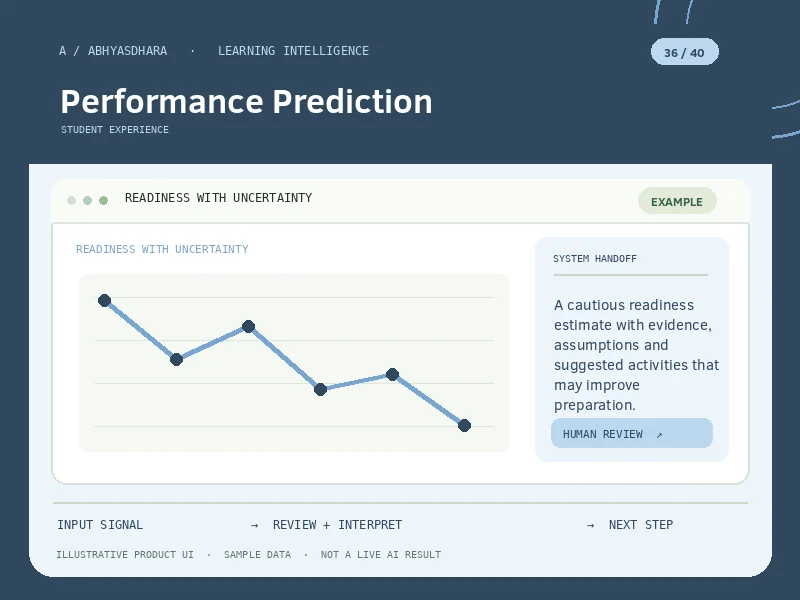
Shows estimates and uncertainty from practice data, never guaranteed exam ranks.
Estimate ranges under clear assumptions, distinguish mock-test readiness from actual exam results and explain uncertainty.
Explore all 40 feature visuals →Students want to understand readiness, but a precise-looking expected rank from limited practice data can be deceptive.
Estimate ranges under clear assumptions, distinguish mock-test readiness from actual exam results and explain uncertainty.
A cautious readiness estimate with evidence, assumptions and suggested activities that may improve preparation.
Review the sequence from input to reviewable output.
Students want to understand readiness, but a precise-looking expected rank from limited practice data can be deceptive.
Practice history, exam pattern, calibration information and uncertainty about future question mix.
Estimate ranges under clear assumptions, distinguish mock-test readiness from actual exam results and explain uncertainty.
A cautious readiness estimate with evidence, assumptions and suggested activities that may improve preparation.
Example only. This is not live customer data or an AI-generated result.
A student sees a wide plausible practice-score range and the topics that most affect that estimate, not “guaranteed selection.”
Do not promise ranks, selections or accuracy percentages without validation. Insufficient data should lead to no estimate.
Do not promise ranks, selections or accuracy percentages without validation. Insufficient data should lead to no estimate.
Illustrations are not live AI output or evidence of tested accuracy.